
Post In:
- Attendance Management


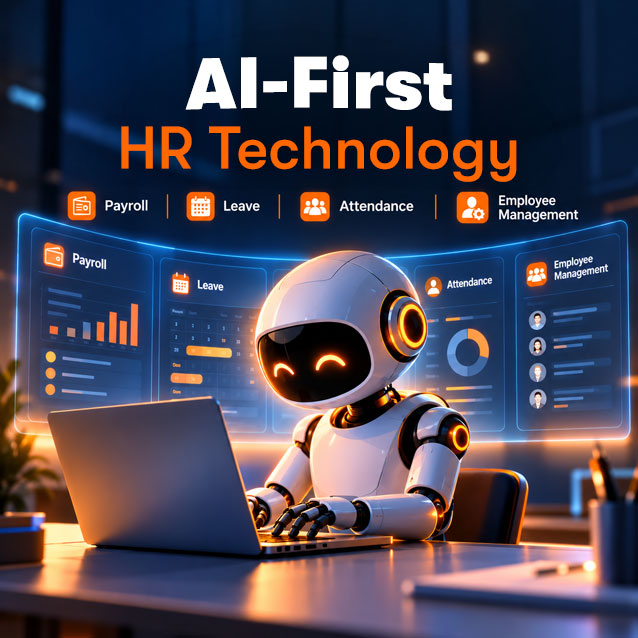
HelixtaHR is India's leading HRMS software for payroll, leave, attendance and employee management — smart, AI-first HR technology designed to simplify work for businesses.
Contact Info
Let’s be honest, dealing with people can be one of the most difficult aspects when operating a company. It may not be easy for you; you are a startup entrepreneur doing various jobs, an Small medium business owner who gets overwhelmed with Excel sheets, or an HR manager trying to do multiple things at once.
It doesn’t have to be this way. HR software requirements are increasing day by day. It is good HR software as it quietly handles all of this in the background. And in 2026, with teams spread across cities and different locations, with compliance requirements getting more complex every year, you can easily manage
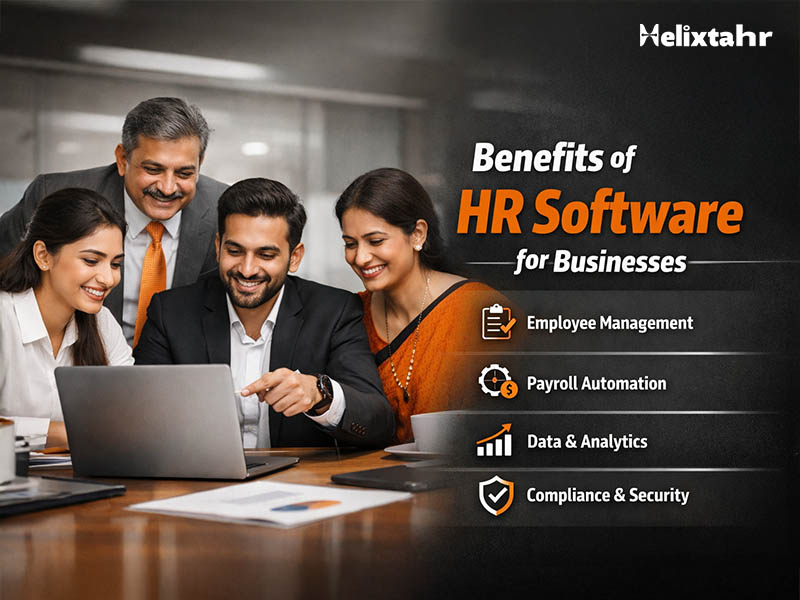
HR software, which people refer to as Human Resource Management Systems HRMS and Human Resource Information Systems HRIS, functions as a digital platform that organizations use to manage their complete employee lifecycle. The system functions as a central platform which allows organizations to manage their HR operations with greater efficiency.
A decent HR software or HRMS software will cover:
The best platforms enable users to perform all functions through a unified system, which allows data to transfer between different system components without requiring users to input information again. That last part sounds small, but it’s actually where a huge amount of admin time disappears.
Is HR software good for small businesses? This question comes up a lot. The assumption that HR software is for big companies — enterprises with dedicated HR departments, IT teams and implementation budgets measured in six figures.
But here’s the thing about running a small team: you have the same legal and administrative obligations as a large company, just with a fraction of the resources. A 20-person startup still needs to track leave entitlements. Still needs to run payroll correctly. Still needs to onboard new staff properly. Still needs to manage performance conversations.
HR software for small businesses and HR software for startups has genuinely changed in recent years. Platforms are lighter, faster to set up, priced for smaller teams, and designed so that a non-HR person can figure them out without a training course. The entry point is much lower than most people assume.
And the cost of not having it? That tends to show up at the worst times — during a fast hiring sprint, or when a long-standing employee suddenly disputes their leave balance, or when you’re trying to close a funding round, and someone asks for your HR documentation.
Features are one thing, and their real-world impact is another. Here’s what changes when you move from manual HR to a proper system.
Leave approval chains via email. Payslip requests. The process requires manual spreadsheet updates whenever someone changes their address. The tasks need to be completed individually because they require an excessive amount of time to finish. The process of automating these tasks delivers two benefits because it saves multiple hours of work while eliminating a persistent source of annoyance for all workers.
Payroll errors are genuinely damaging — not just financially, but to trust. When someone’s pay is wrong, it’s hard to recover quickly. HRMS software with payroll built in automates the calculations, handles deductions, and generates payslips without someone manually checking formulas in a spreadsheet at 11 pm on payday eve.
Employment law moves. Minimum wage thresholds change. Statutory leave rules get updated. Staying on top of all of it manually is genuinely difficult, especially if HR isn’t your primary job. Good HR software tracks these changes and flags when something needs your attention — before it becomes a problem.
This one gets underestimated. When employees can check their own leave balance, download a payslip, update their bank details, and submit an expense, without emailing anyone, they can save time and do not require assistance. It’s a small thing that adds up. People notice when the admin is frictionless.
One thing that surprises people moving to HR software for the first time is how much visibility it gives them. Who’s taken the most leave this quarter? Which department has the highest turnover? Where are the skills gaps? You can’t answer these questions from a spreadsheet, but a good HRMS gives you dashboards that make the patterns visible. That changes how you plan.
There’s no shortage of HR software options out there. Some are enormous platforms built for enterprises that have been around since before cloud software existed. Others are lightweight tools that do one or two things well but fall apart when your needs grow.
HelixtaHR sits in a different category. It’s a modern HRMS software platform built specifically for growing businesses. It is the kind of company where you’re serious about getting HR right but don’t have the budget or the patience for a six-month enterprise implementation.
What makes it worth looking at:
The implementation timeline is also worth mentioning. A lot of HR platforms quote weeks or months to get up and running. HelixtaHR is designed to go live in days, which matters when you’re a small team that can’t afford to have half your HR operations in limbo for a month.
If you’re currently managing HR through a combination of spreadsheets, WhatsApp, and other traditional methods, then HelixtaHR is genuinely worth a closer look.
The market is crowded, and the demos all look good. Here’s what to actually pay attention to when you’re evaluating options:
Startups are famously good at moving fast and equally famous for leaving the infrastructure work until it’s a crisis. HR typically falls into this category.
The spreadsheet approach works fine until it doesn’t. Usually that moment arrives during a growth spike — you’re hiring fast, you’ve got people in multiple locations, and suddenly you’re trying to figure out leave balances and payroll for a team that’s doubled in size since last quarter. That’s a bad time to implement new systems.
The analogy that’s stuck with me: setting up proper HR infrastructure early is like sorting your cabling before the office fills up. It takes an hour when the space is empty and a nightmare when there are 40 people and desks everywhere.
Small businesses can’t always match large companies on salary. They can compete on culture, flexibility, and the quality of the work environment. HR software helps with all three.
When your people operations run smoothly, onboarding is clear, pay is always right, leave is easy to book, reviews happen when they’re supposed to, it creates a baseline of trust and professionalism that people notice. Particularly, people who’ve worked at chaotic companies before.
HR software for small businesses also typically delivers very fast ROI. The time saved on admin tasks alone tends to pay for most platforms within the first quarter. The numbers become understandable through three factors which include decreased payroll mistakes and improved employee experience and reduced compliance challenges.
Your business runs on people. The way you manage those people — how smoothly things work, how fairly people are treated, how visible the data is to leadership — shapes everything from retention to performance to culture.
HR software isn’t just an admin tool. The right HRMS software is the infrastructure for how your business operates at a human level.
If you’re still doing all of this manually or you’re on a system that’s clearly outgrown your needs, now is the time to change that. Start with HelixtaHR. It’s built for where you are right now, and it’ll grow with you.
